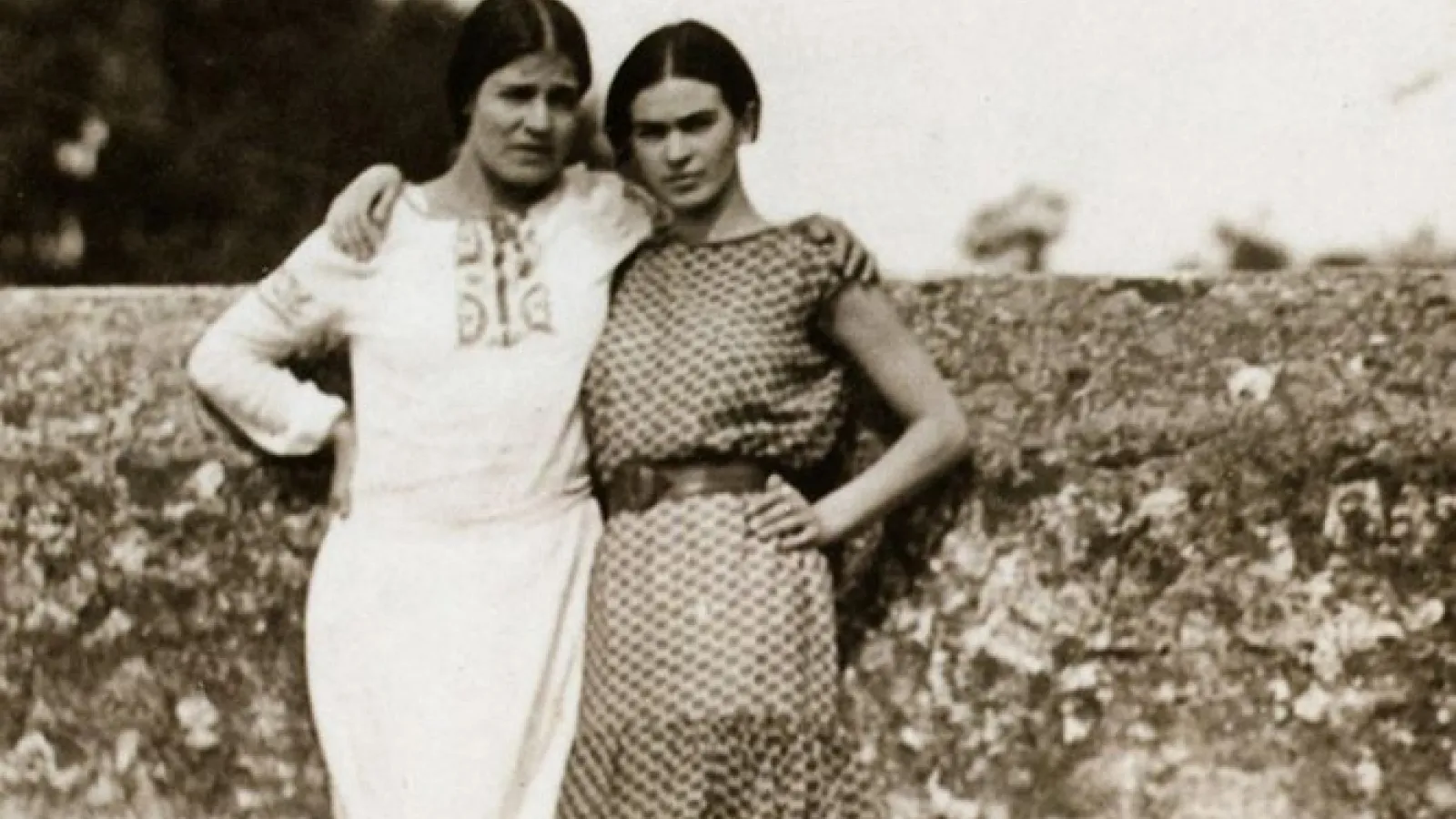
Please join us for this CLAS Lunch & Learn featuring Dr. Stephanie Smith, Professor in the Department of History. Dr. Smith will share about the research she has conducted on Frida Kahlo for her upcoming book.
Lunch will be served. Open to all, registration required.
Abstract
Why does Frida Kahlo continue to fascinate so many people decades after her death? At least part of the answer derives from viewers’ interpretations of Kahlo’s paintings and an almost reverential faith that her striking images provide a window into her life. In this manner, both women and men alike empathize with Kahlo’s images that often depict her pain and devastating heartbreak exacerbated by her complex marriage to Diego Rivera. While it is true that periods of anguish contributed to Kahlo’s identity and art, narratives that focus primarily on her as the long-suffering woman diminish her revolutionary contributions and bury her historical memory beneath the rhetoric of a scorned lover further limited by her broken body.
In her talk Stephanie Smith moves beyond these interpretations of Kahlo as the tragic hero and instead highlights the artist’s dynamic agency and cultural contributions through an emphasis on her longtime friendships with creative women. Throughout her life, Kahlo’s deep ties to women from Mexico and other parts of the world brought meaning to her art and her very existence. Yet as she gained recognition for her own artistic and political work over time, Rivera was not above mobilizing his own relationships with their mutual colleagues and even family members as a tool to penalize Kahlo for her perceived successes or even his own disappointments. Smith explores these episodes, but she also discusses the ways in which Kahlo and the transnational women linked arms to break through patriarchal restraints and expand artistic and societal boundaries throughout the 1930s, 1940s, and early 1950s. For Kahlo and her friends, living in Mexico City during the post-revolutionary era provided previously unknown options, and they seized the unique intellectual and artistic openings to challenge existing power dynamics within politics and culture.
Photo: Tina Modotti and Frida Kahlo, 1928, Museum of Modern Art, New York, NY, USA.